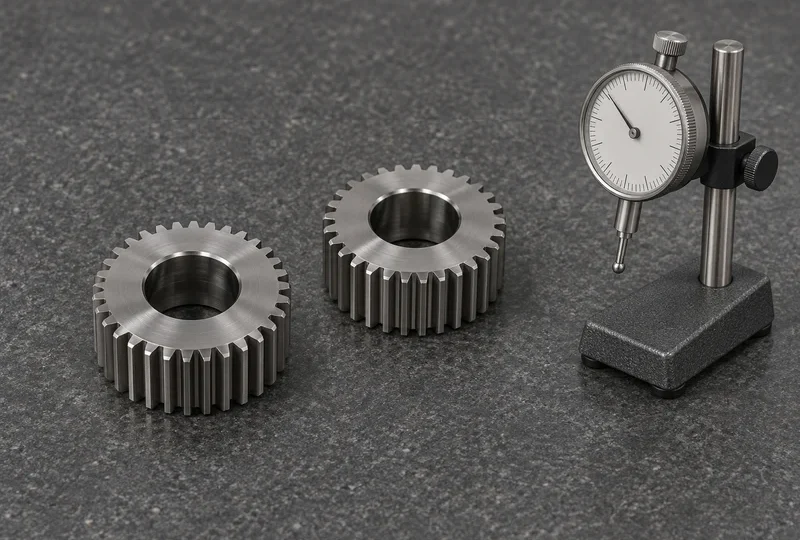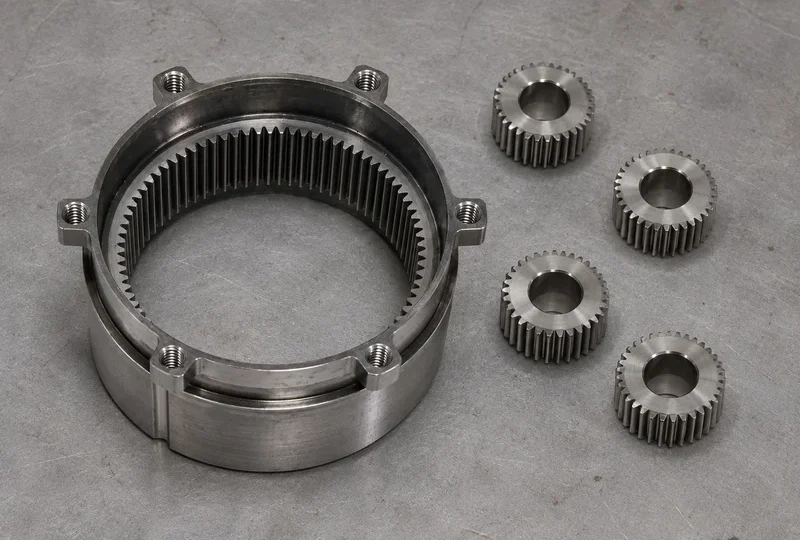


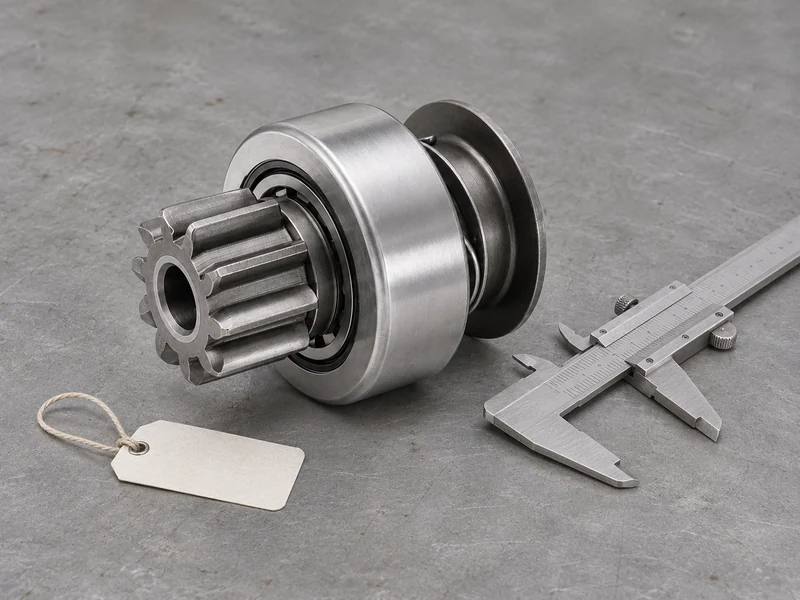
To choose a starter drive, identify the installed starter assembly first, then verify the loose drive’s mating interfaces and operating function. Vehicle model and engine information help narrow the search, but they cannot establish the correct drive when several starter variants or replacement assemblies are possible.
For distributors and remanufacturers, the goal is a repeatable fitment record: which drive is approved for which starter variant, on what evidence, and with which limits. A sample that looks familiar is a candidate for checking, not an approved bulk-order specification.
Keep three identities in separate fields
Record the vehicle or engine application, the complete starter manufacturer and part number, and the loose starter-drive reference separately. A number on an engine list may identify a complete starter rather than the component being ordered. Photograph the actual markings before transcribing them.
On returned cores, check whether the assembly still matches its label and records. Rebuilt units can contain changed components. If identity is uncertain, record that uncertainty and use a controlled sample inspection rather than selecting whichever catalogue picture looks closest.
DENSO’s starter-selection guidance emphasizes the replacement unit’s fitting interfaces, pinion information and rotation. Its guidance concerns complete starters; a loose-drive purchase additionally needs the internal mating details relevant to the particular starter.
Make the sample photographs useful
Photograph the pinion end, rear engagement side, side profile and visible markings. Include a scale in a separate reference view where practical, but use controlled measurements for acceptance. Avoid relying on perspective in a photograph to establish a diameter or length.
Keep the sample identity in the image filenames or accompanying record. When several variants arrive together, a clear photo set for one drive is more valuable than a group photograph with no link to individual references.
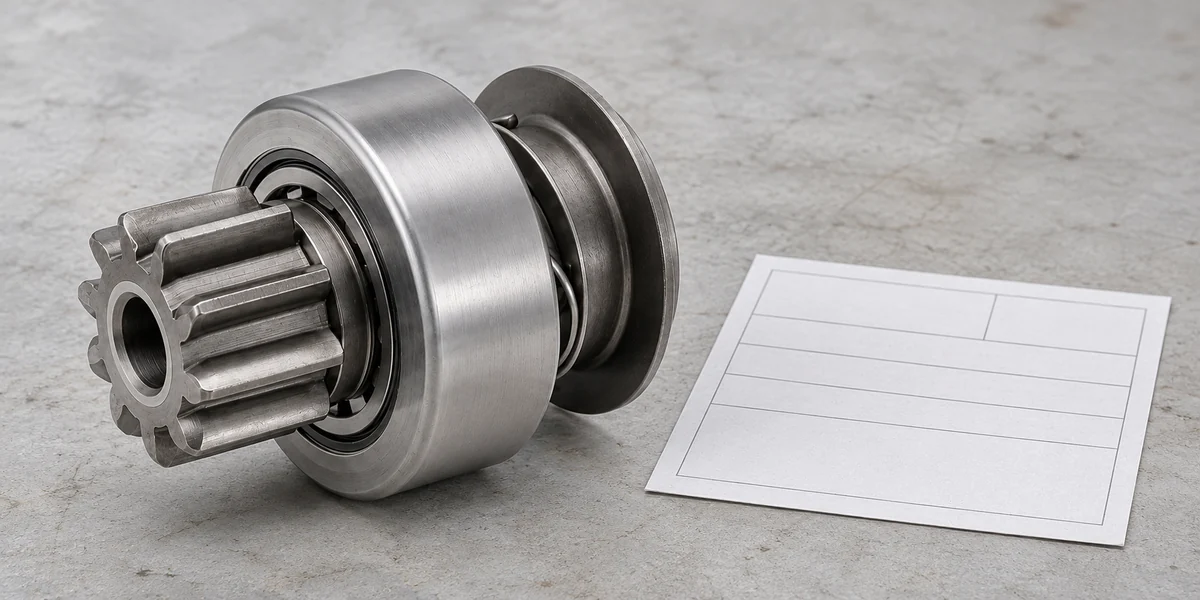
Compare the interfaces that must work together
| Interface or feature | What to verify | What a partial match cannot prove |
|---|---|---|
| Pinion to ring gear | Tooth count, specified tooth geometry, width and relevant diameters | The same tooth count does not establish the same tooth system or engagement |
| Drive to shaft | Bore or spline definition, locating features and movement requirements | A similar bore diameter does not establish spline compatibility |
| Engagement mechanism | Lever or collar interface, axial positions and travel specified for the starter | Matching overall length does not establish the correct engagement position |
| Clutch or drive function | Required direction and agreed functional acceptance | Free movement by hand does not prove performance under the required load |
| Assembly envelope | Housing, flange and adjacent-part clearances | A drive that slides onto the shaft may still interfere elsewhere |
State the viewing direction whenever recording clockwise or counterclockwise rotation. A direction written without its reference view is ambiguous. Use the maker’s convention and preserve it in the enquiry.
Measure a worn sample with care. Wear can obscure the original requirement, especially at teeth, journals and engagement surfaces. Identify whether the sample is an approved master, a used reference or a returned failure part.
Confirm the engagement architecture and duty
The catalogue term “Bendix” is not a complete construction specification. Use the Bendix terminology guide to distinguish the name from the actual drive arrangement. Confirm the installed starter design and the relevant component interfaces.
Record voltage and starter rating as assembly context, not as proof that a loose drive is interchangeable. Add the application duty information needed by the responsible engineering team, including unusual starting frequency or operating conditions where relevant. Do not infer a replacement drive’s functional capability from its exterior finish.
Resolve conflicting references before ordering volume
When two catalogues disagree, keep both original records and their dates. First determine whether the entries refer to the same level of assembly and the same starter variant. A complete-starter interchange statement does not necessarily authorize interchange of every internal drive component.
If a supplier proposes a candidate with a dimensional difference, request the technical basis and any documented restrictions. Do not silently average dimensions or remove a suffix to force a match. Put unresolved differences into an exception list with an owner and the evidence needed to close them.
Only release the bulk order after the agreed sample and mating-part checks are complete. If functional validation is required, identify its method and acceptance criteria before testing. Record the actual starter configuration used for approval.
Use an approval record that survives the next reorder
The following is a suggested buyer record, not a manufacturer-issued interchange certificate.
| Record section | Entry to retain |
|---|---|
| Application identity | Vehicle or engine context and complete starter reference |
| Drive identity | Supplier item number, drawing revision, sample ID and photographs |
| Interface verification | Compared dimensions, mating references and results |
| Functional evidence | Agreed procedure, configuration, conditions, report and disposition |
| Approval boundary | Approved starter variants and explicit exclusions |
| Release control | Approver, date, packaging identification and change-notification requirement |
A record approved for one variant should not become a blanket approval for every vehicle listed under a broad engine family. Revisit the approval when the component revision, source or relevant starter configuration changes.
Send a complete starter-drive enquiry
TAITECH supplies the B2B market through its starter-drive product range. For a wholesale or remanufacturing enquiry, send the starter and drive references, clear sample photos, available dimensions, target quantities and required validation scope.
Identify any catalogue conflict or missing label in the first message. Ask for a response that distinguishes confirmed information, candidate matches and questions requiring sample verification before a bulk quotation is treated as an approved fitment.