

How Does a Bendix Drive Work?
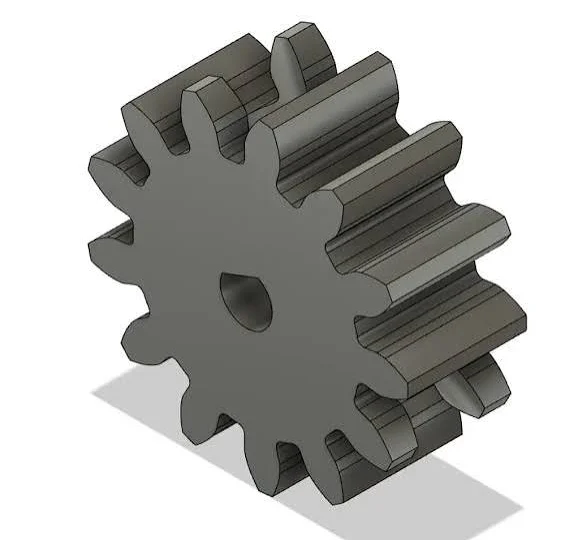
A Bendix drive is the mechanical interface between the starter motor and the engine’s flywheel or flexplate ring gear. Its basic purpose is simple: transfer the starter’s rotational torque to the engine during starting and prevent the engine from driving the starter at excessive speed after combustion begins.
In a traditional inertia-type design, the starter motor rotates the drive shaft while the pinion moves into engagement with the ring gear through the mechanical action of the drive mechanism. Once the engine fires and begins rotating faster than the starter, the drive must separate or provide an overrunning function so that the high engine speed is not transmitted back into the starter motor.
Why Does a Bendix Drive Fail to Engage or Disengage Properly?
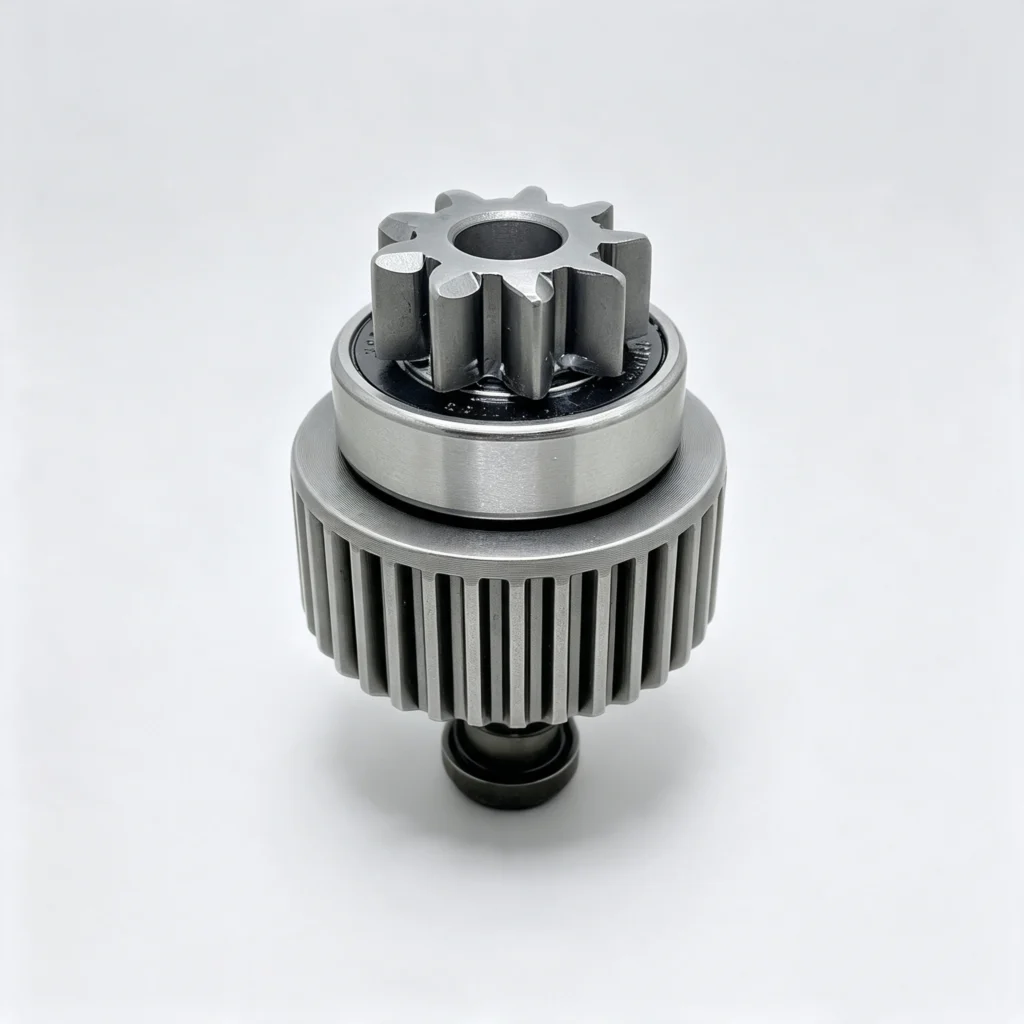
When a starter motor spins but the engine does not crank, the problem is often not the starter motor itself. A worn or incorrectly specified Bendix drive can cause incomplete engagement, gear clash, free-spinning, delayed disengagement, or abnormal noise. These failures are costly for distributors and repair shops because they lead to repeated replacements and customer complaints. The critical issue is matching the starter drive to the complete starting system: pinion tooth count, gear geometry, pitch diameter, rotation direction, engagement travel, spring characteristics, overrunning clutch capacity, and flywheel compatibility. Choosing only by appearance or part number can create compatibility problems, especially when different starter applications use similar-looking components.
The purpose of a Bendix drive is to transfer starter-motor torque to the engine flywheel during cranking, then disengage the pinion when the engine starts. Correct selection depends on tooth count, gear geometry, rotation, engagement dimensions, overrunning protection, and application compatibility. Pan Nation manufactures starter drives for professional automotive applications, with OEM, ODM, and Customizable solutions for distributors and bulk buyers.
To understand why the Bendix drive is so important, it helps to look beyond the name itself. The following sections explain its operating principle, critical design parameters, common failure modes, and the selection criteria a professional buyer should use when sourcing from a Manufacturer or Supplier.
Why the engagement and release sequence matters
The timing and smoothness of engagement directly affect gear wear, starting noise, starter life, and ring-gear durability. If the pinion does not fully engage, only part of the tooth surface carries the starting load. This concentrates stress on the tooth edges and can cause premature wear or chipping.
Conversely, if the drive remains engaged after the engine starts, the starter can be exposed to rotational speeds far beyond its normal operating range. A correctly engineered starter drive therefore has two essential jobs: deliver sufficient torque during cranking and protect the starter immediately after engine start.
Why Is a Bendix Drive Important for Starter Performance?
The starter drive is a relatively small component, but it operates under a demanding load cycle. During starting, the starter must overcome engine compression, friction, oil resistance, and other mechanical loads. The pinion and ring gear therefore experience significant impact loading and tooth contact stress.
For a distributor, simply purchasing a low-cost replacement drive can be risky. A drive that looks identical may have different tooth geometry, shaft dimensions, rotation, or engagement characteristics. These differences can create poor gear meshing, abnormal noise, premature tooth wear, or starter failure.
| Parameter | Correct Application | Incorrect or Poorly Matched Application |
|---|---|---|
| Pinion tooth count | Matches the specified ring gear and starter application | Incorrect ratio or incomplete gear compatibility |
| Gear geometry | Correct pitch, pressure angle, and tooth profile | Noise, uneven contact, accelerated wear |
| Rotation direction | Matches starter motor rotation | Incorrect engagement or drive operation |
| Engagement travel | Provides sufficient tooth engagement | Partial engagement and tooth-edge loading |
| Overrunning protection | Protects the starter after engine start | Starter overspeed and potential damage |
What Technical Parameters Should Be Checked Before Selecting a Bendix Drive?
Professional sourcing should begin with engineering data rather than visual similarity. The most important parameter is normally the pinion configuration. Depending on the application, buyers need to verify tooth count, pitch, pressure angle, outside diameter, root dimensions, gear width, shaft interface, and rotation direction.
1. Pinion tooth count and gear geometry
The number of pinion teeth must correspond to the starter and ring-gear design. However, tooth count alone is not enough. Two gears with the same number of teeth can still be incompatible if their module, diametral pitch, pressure angle, tooth profile, or pitch diameter differs.
This is why an experienced Manufacturer should evaluate the complete application specification rather than identify a part solely from a photograph.
2. Shaft and mounting dimensions
The drive must correctly fit the starter armature shaft or associated drive mechanism. Important dimensions include shaft diameter, spline or engagement configuration, overall length, shoulder position, and axial movement. Even a small dimensional mismatch can prevent correct installation or change the intended engagement position.
| Typical Selection Data | Why It Matters | Buyer Verification |
|---|---|---|
| Pinion teeth | Determines gear compatibility and drive ratio | Confirm against application/OE specification |
| Pinion outside diameter | Affects ring-gear meshing | Measure or confirm engineering drawing |
| Overall drive length | Controls installation and engagement position | Compare with OE sample |
| Shaft interface | Ensures mechanical fit | Verify diameter, spline and shoulder details |
| Rotation | Ensures correct drive operation | Confirm starter application |
Why Does the Bendix Drive Need an Overrunning Mechanism?
One of the most important functions of a starter drive is protecting the starter after the engine starts. Before ignition, the starter motor drives the engine. After ignition, the relationship reverses: the engine can rotate much faster than the starter motor.
Without effective overrunning protection, engine speed could be transmitted directly into the starter. This can result in excessive rotational speed, heat generation, bearing stress, and damage to the starter assembly.
The exact mechanism depends on the drive design. Modern starter drives may use an overrunning clutch or other engineered disengagement arrangements rather than relying solely on the traditional inertia principle associated with the original Bendix concept.
Why this matters to distributors
For wholesale buyers, clutch performance is a key quality consideration. A drive can have accurate dimensions and still perform poorly if its internal components cannot reliably transmit starting torque while allowing controlled overrunning.
Important quality factors include clutch torque capacity, internal component hardness, lubrication, spring performance, assembly accuracy, and durability under repeated starting cycles.
Why Choose an Experienced Bendix Drive Manufacturer?
For B2B buyers, manufacturing capability matters because starter drives are precision mechanical components. A reliable Supplier should be able to control critical dimensions consistently across production batches.
At Pan Nation, our manufacturing approach is built around automotive component production and assembly experience. For international distributors, the practical advantage is not simply a lower unit price. It is the ability to maintain consistent dimensions, stable gear quality, reliable production capacity, and repeatable specifications across bulk orders.
OEM, ODM and Customizable solutions
Different markets may require different specifications, branding, packaging, or application coverage. Pan Nation can support OEM and ODM cooperation, as well as Customizable requirements where the project specifications are clearly defined.
For distributors, this can be especially useful when developing a private-label starter-parts program. Instead of treating every order as an isolated transaction, the supplier can work from confirmed technical data and production requirements.
How Should Distributors Select a Bendix Drive Supplier?
The best supplier should be evaluated on more than quotation price. A professional sourcing process should examine five areas.
- Application accuracy: Can the Supplier identify the correct starter and vehicle application?
- Dimensional control: Are critical gear and shaft dimensions consistently controlled?
- Material and heat treatment: Are the required mechanical properties maintained?
- Production capacity: Can the Manufacturer support repeat wholesale orders?
- Quality and after-sales support: Can technical problems be investigated using samples, drawings, and application data?
For high-volume buyers, it is also useful to establish an approved specification containing part number, tooth count, dimensions, rotation, application, packaging requirements, inspection criteria, and acceptable tolerances. This reduces ambiguity between purchase orders and future replenishment orders.
Why Is Correct Bendix Drive Selection More Important Than Price?
The lowest purchase price does not necessarily produce the lowest total cost. A failed starter drive can create returns, warranty claims, labor costs, damaged ring gears, shipping expenses, and customer dissatisfaction.
For an automotive parts distributor, consistency is particularly important. If one batch performs differently from the previous batch, the distributor may lose confidence in the entire product line.
A technically controlled supply chain should therefore focus on repeatability. The objective is to receive the same critical specifications and performance characteristics every time an order is reproduced.
Conclusion: What Is the Purpose of a Bendix Drive?
A Bendix drive transfers starter torque to the engine, enables reliable cranking, and protects the starter after engine start. For wholesale sourcing, choose Pan Nation for stable quality, OEM/ODM capability, Customizable solutions, and factory-direct supply. Contact us with your sample, OE number, drawing, or application data for technical evaluation.