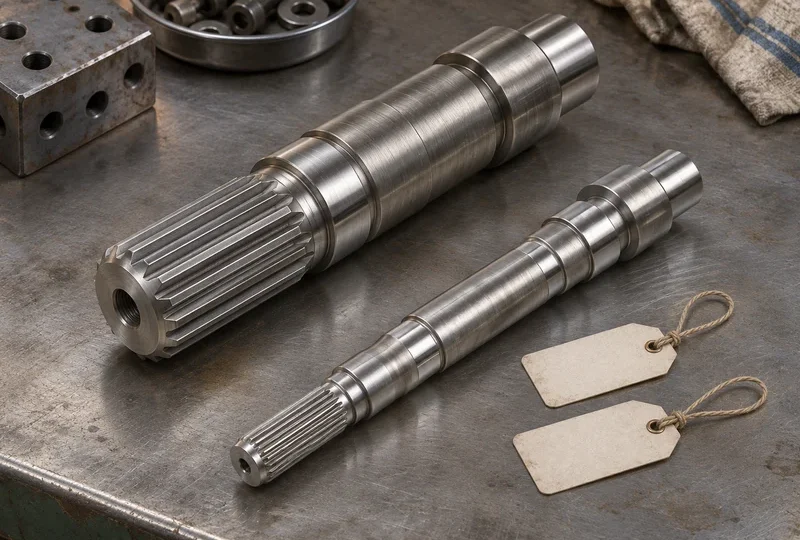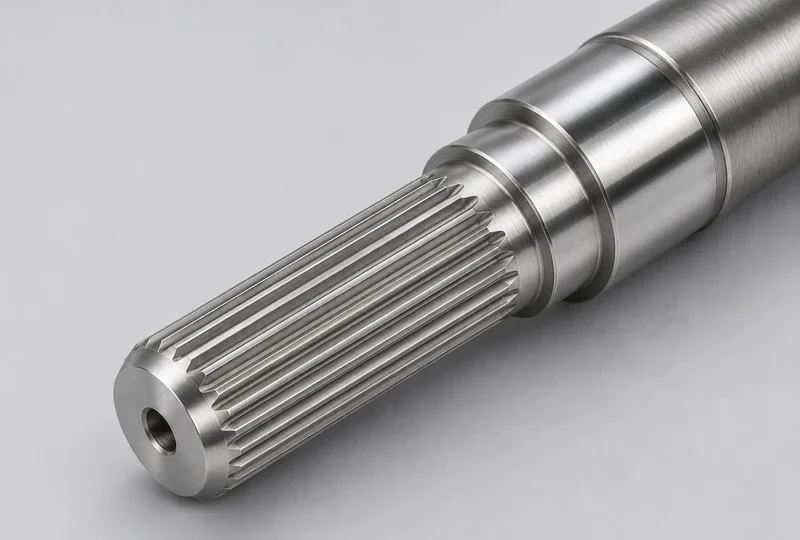


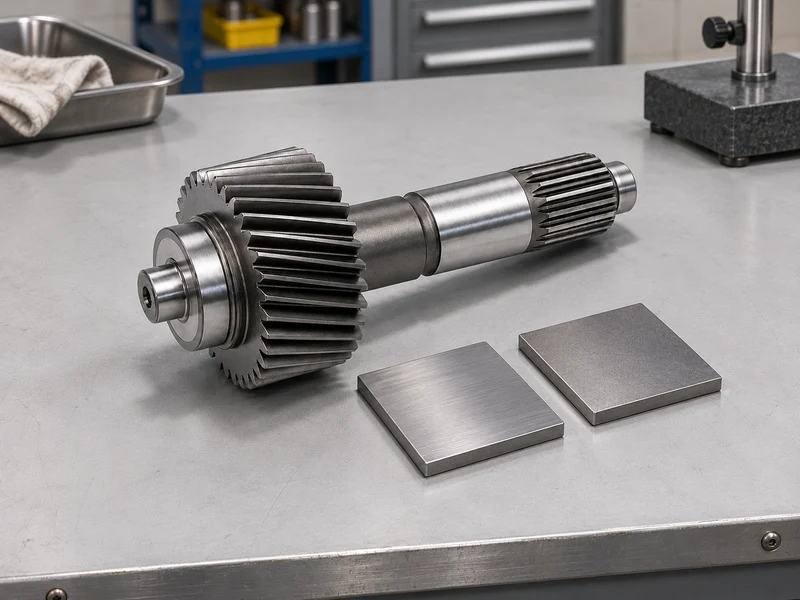
Start a shaft material review at the section that carries the load. On a motor shaft it might be the shoulder next to a bearing. On a gear shaft it might be the transition behind the pinion or the root of a spline. Note the torque, bending, reversals and operating environment there before choosing a steel grade.
Turn the drawing into a list of property needs
Use the load cases to establish what the core must carry. Then mark surfaces that need wear resistance or a specified finish, such as a seal track or a sliding spline. Check the largest relevant section when assessing hardenability. A steel that achieves the required condition in a small test bar may respond differently in a thick shaft section under the intended heat treatment.
For a fatigue-sensitive section, include the load history and the actual fillet or tooth root. Review whether steel cleanliness needs its own purchase requirement. Inclusions can act as initiation sites for fatigue cracks. The relevance of a cleanliness limit depends on the stress and the material condition at the location of interest. Ovako’s material data guidance on hardenability and cleanliness.
Compare routes that fit the part
| Service condition | Candidate to review | Evidence to ask for |
|---|---|---|
| Moderate loads and a straightforward turned geometry | Carbon or alloy steel in the delivery condition specified for the design | Section properties and material condition, plus machining and finish requirements |
| Core strength through a larger section | Steel with suitable hardenability and an agreed heat treatment route | Property targets and the location used to verify them |
| Wear at a journal, seal track or spline | Compatible substrate with a defined local surface requirement | Hardness or depth where specified, finish stock and final inspection |
| Corrosive service | Steel and protection suited to the exposure, which may include a stainless grade | Actual exposure and the mechanical properties in the delivered condition |
Keep the number of candidates small. Compare incoming stock size and condition, tool access at the shoulder, the sequence for hardening and finishing, and how the finished part will be inspected. If a material substitution also changes the machining or heat treatment route, have the drawing owner review the proposed finished condition before changing the order.
Write the conditions into the purchase specification
State the grade, governing material specification, product form and delivery condition. Add the finished heat treatment and the locations where the part must meet any hardness or property requirements. A material certificate and a finished shaft inspection record establish different parts of that specification. Request each where it supports an acceptance decision.
Send the shaft drawing with the loaded sections and wear surfaces marked, and include the proposed steel and the condition in which it will be supplied. Send a shaft material inquiry.