

Why Do Planetary Shafts Wear Out or Break Under Heavy Loads?
Are your planetary shafts experiencing excessive wear, bending, or premature failure? These problems can reduce gearbox performance, increase maintenance costs, and cause unexpected equipment downtime. In planetary transmission systems, shafts must withstand repeated loads while maintaining accurate alignment with gears, bearings, and supporting components. Poor material selection, incorrect heat treatment, and machining errors can shorten service life. Choosing a reliable planetary shaft requires careful evaluation of shaft dimensions, mechanical strength, surface hardness, and operating conditions. Understanding these factors helps engineers reduce failure risks and improve transmission reliability.
What Is a Planetary Shaft?
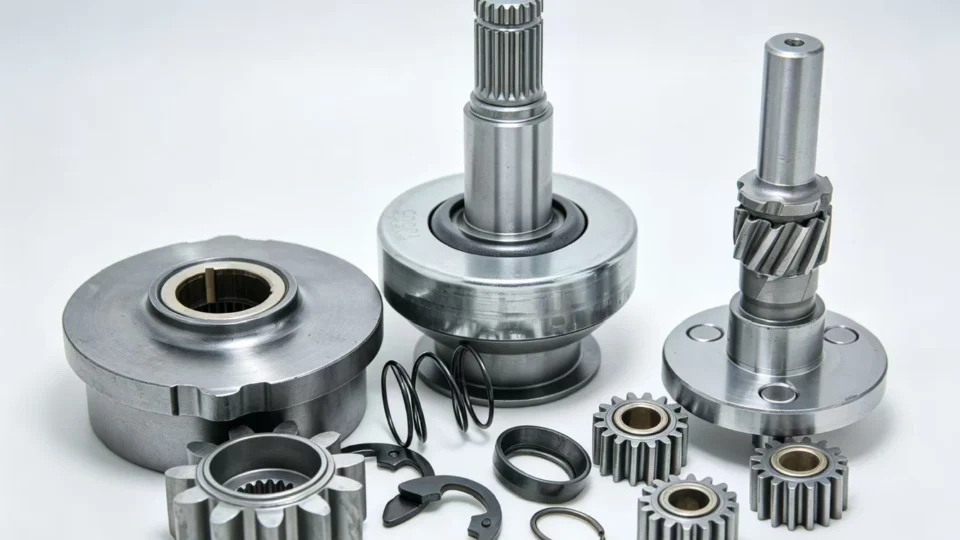
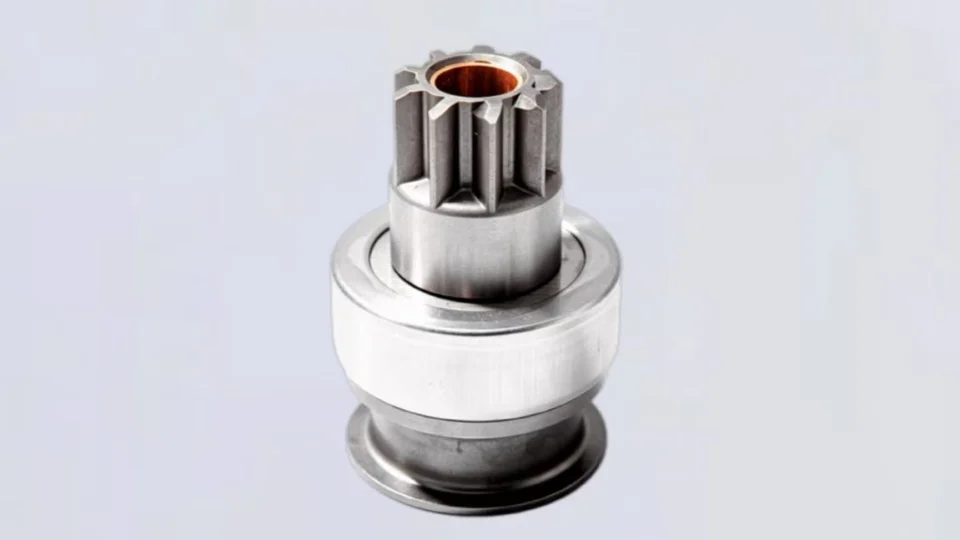
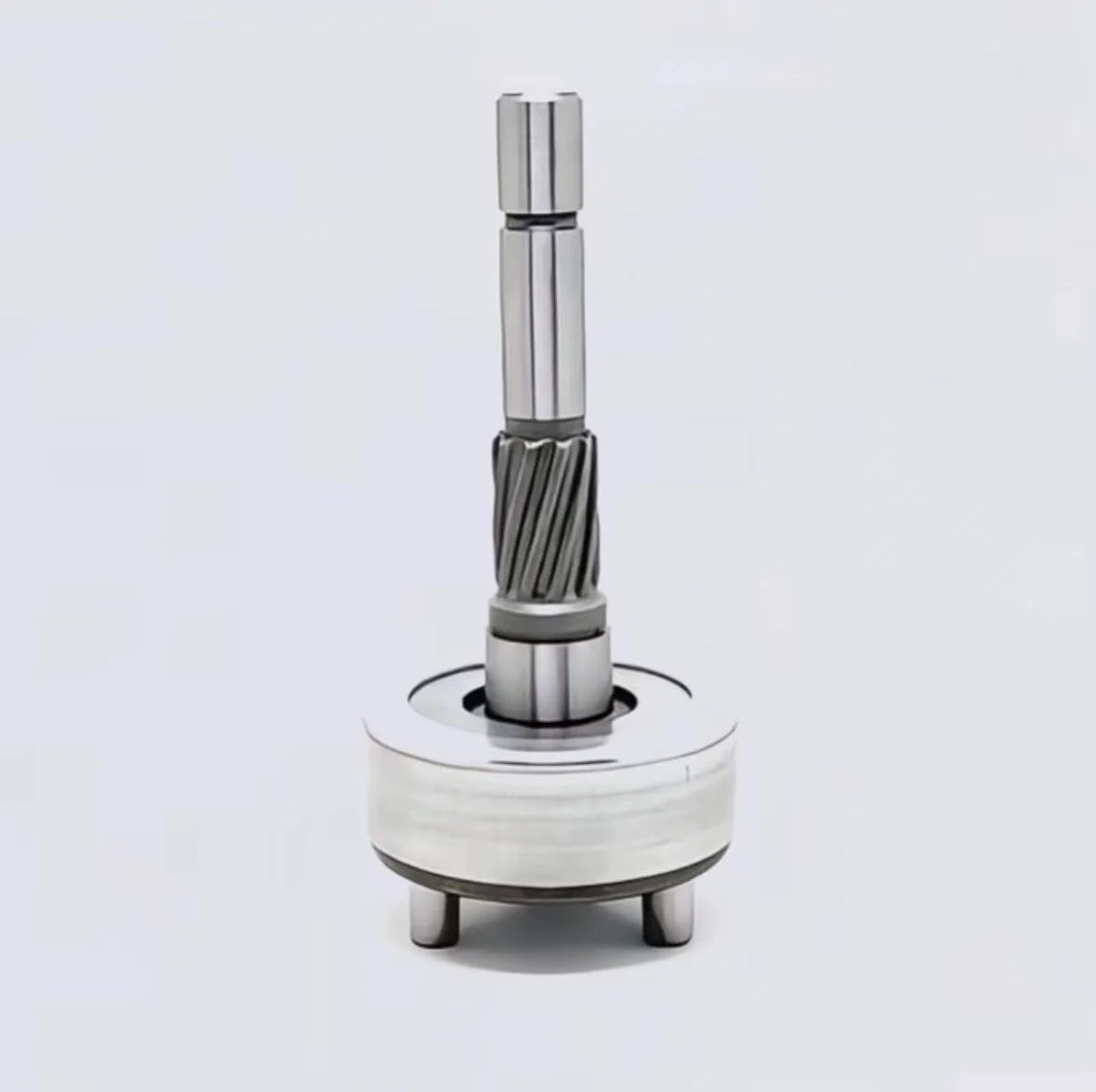
A planetary shaft is a precision mechanical component used in planetary transmission systems to support rotating components, maintain alignment, and withstand operational loads. Depending on the design, it may function as a planet gear shaft, support pin, or torque-transmitting shaft. Our company provides planetary shaft manufacturing solutions with customizable dimensions, material options, precision machining, and OEM and ODM services for industrial customers.
Planetary shafts play an important role in transmission stability and service life. Their performance depends on material selection, shaft geometry, heat treatment, dimensional accuracy, and surface quality. The following sections explain their functions, manufacturing processes, technical requirements, and applications.
1. What Are the Main Functions of Planetary Shafts?
Planetary shafts support rotating components and help maintain the correct mechanical relationships within a planetary transmission. Their specific functions depend on the gearbox design. In many planetary gear systems, planet shafts or pins support planet gears while allowing them to rotate around their own axes.
Supporting Planet Gears
A planet gear rotates around its supporting shaft or pin while revolving around the central sun gear. The shaft must maintain the required position and provide sufficient support under operating loads.
If the shaft bends excessively or its diameter is inaccurate, the planet gear may become misaligned. This can cause uneven tooth contact, vibration, abnormal noise, and accelerated wear. Accurate machining and suitable shaft stiffness are therefore essential.
Withstanding Mechanical Loads
Planetary shafts may experience several types of mechanical stress during operation:
- Bending stress: Caused by radial forces acting on the shaft.
- Contact stress: Occurs at interfaces between the shaft and bearings, bushings, or gear bores.
- Fatigue stress: Develops under repeated loading cycles.
- Friction and wear: Result from relative movement between contacting components.
The actual loading condition depends on whether the component is a stationary planet pin, a rotating shaft, or a torque-transmitting member. Identifying its function is the first step in selecting the correct material and manufacturing process.
Maintaining Transmission Accuracy
Shaft diameter, straightness, runout, and mounting position affect the alignment of the planetary assembly. Excessive dimensional variation can increase clearance or create unwanted interference.
For precision gearboxes, the shaft must work correctly with the carrier, planet gears, bearings, and housing. Proper fit selection helps maintain stable operation and reduces premature component failure.
2. Which Materials Are Suitable for Planetary Shafts?
Material selection affects shaft strength, wear resistance, fatigue performance, machinability, and production cost. The correct material depends on operating torque, shaft dimensions, contact conditions, and expected service life.
Alloy Steel
Alloy steel is widely considered for planetary shafts used in demanding industrial applications. Materials such as 20CrMnTi, 20MnCr5, and 42CrMo4 may be suitable for different designs, depending on the required mechanical properties and applicable material specifications.
20CrMnTi and 20MnCr5 can be considered for case-hardened components requiring a wear-resistant surface and a tougher core. 42CrMo4 may be suitable for applications requiring high core strength and toughness when appropriately heat-treated.
Carbon Steel and Stainless Steel
Carbon steel may be suitable for shafts operating under moderate loads when the required strength and wear resistance can be achieved economically. Stainless steel may be considered where corrosion resistance is important, provided its strength, hardness, and wear characteristics meet the application requirements.
Material selection should consider the complete operating environment rather than the material grade alone. Buyers should confirm the applicable material standard, mechanical properties, heat-treatment condition, and traceability requirements.
Material Comparison
| Material | Typical Treatment | Potential Advantage | Application Consideration |
|---|---|---|---|
| 20CrMnTi | Carburizing and hardening | Hard surface and tough core | Control case depth and distortion |
| 20MnCr5 | Case hardening | Wear-resistant contact surface | Verify the specified material grade |
| 42CrMo4 | Quenching and tempering | High core strength and toughness | Evaluate surface wear requirements |
| Carbon steel | Application-dependent treatment | Potentially economical production | Confirm strength and fatigue requirements |
Note: Material suitability depends on the shaft design, actual loads, heat treatment, and operating environment. These materials are examples, not universal recommendations for every planetary shaft.
3. Why Is Heat Treatment Important for Planetary Shafts?
Heat treatment improves the mechanical properties of planetary shafts. Depending on the process, it can increase surface hardness, improve core strength, and enhance resistance to wear or fatigue.
Carburizing and Case Hardening
Carburizing introduces carbon into the surface of suitable steel components. Subsequent hardening produces a wear-resistant surface while retaining a relatively tough core.
This process may be appropriate for shafts exposed to repeated contact with planet gear bores, bushings, or supporting components. The required surface hardness and effective case depth should be determined according to contact stress, shaft dimensions, and expected service life.
Quenching and Tempering
Quenching and tempering can improve the strength and toughness of suitable alloy steels. This process is commonly considered for shafts exposed to bending loads and repeated mechanical stress.
Excessive hardness without sufficient toughness may increase the risk of brittle failure. Insufficient strength may lead to permanent deformation. Engineers must balance hardness, toughness, fatigue resistance, and dimensional stability.
Induction Hardening and Surface Finishing
Induction hardening can harden selected surface areas when the material and shaft geometry are suitable. Precision grinding may then be required to achieve the specified diameter, roundness, and surface finish.
Important heat-treatment control points include:
- Surface hardness: Must meet the agreed specification.
- Core toughness: Helps resist bending and fracture.
- Case depth: Must support the expected contact loads.
- Heat-treatment distortion: Must be controlled to maintain dimensional accuracy.
- Crack inspection: Helps identify potentially damaging defects.
4. How Are Planetary Shafts Manufactured?
Planetary shaft manufacturing commonly involves raw material preparation, CNC turning, heat treatment, precision grinding, and final inspection. The process depends on the shaft geometry, required tolerances, material, production volume, and surface specifications.
Raw Material Preparation
Production starts with selecting suitable raw material and verifying its grade. Material inspection helps prevent problems caused by incorrect chemical composition or unsuitable mechanical properties.
For critical applications, material certificates and batch traceability may be required. These records help maintain consistent production quality and support failure analysis if a problem occurs in service.
CNC Turning and Precision Machining
CNC turning produces shaft diameters, shoulders, grooves, chamfers, and other rotational features. Additional machining may include drilling, milling, threading, and end-face processing.
Critical dimensions should be identified before production. These often include bearing journals, mounting diameters, shoulder positions, and retaining-ring grooves. Errors in these features can cause assembly problems even when the main shaft diameter meets its tolerance.
Grinding and Final Finishing
Precision grinding may be used after heat treatment when tighter dimensional control or improved surface finish is required. It is particularly relevant to functional surfaces that contact bearings or bushings.
Not every planetary shaft requires grinding. The process should match the drawing requirements and application needs. Unnecessary finishing operations increase manufacturing costs without necessarily improving performance.
Typical Manufacturing Process
- Review the technical drawing and material specification.
- Inspect incoming material and verify traceability requirements.
- Cut raw material to the required length.
- Perform CNC turning and other necessary machining operations.
- Apply the specified heat-treatment process.
- Complete finish grinding or secondary machining where required.
- Inspect dimensions, hardness, and surface condition.
- Perform final quality checks and prepare the parts for shipment.
5. Which Dimensional Tolerances Matter Most?
Dimensional accuracy directly affects planetary shaft assembly and operating performance. An oversized shaft may cause excessive interference, while an undersized shaft may create excessive clearance and unwanted movement.
Shaft Diameter and Fit
Shaft diameter tolerance determines how the shaft fits with its mating bearing, bushing, or gear bore. Depending on the design, the connection may require a clearance fit, transition fit, or interference fit.
The correct fit depends on component movement, loading, operating temperature, and assembly requirements. A stationary planet pin may require different fits at its carrier interface and the rotating gear interface.
Runout and Surface Roughness
Runout affects rotational accuracy and can contribute to vibration if it exceeds the specified limit. Surface roughness influences friction and wear at functional contact surfaces.
These parameters should be defined according to the drawing and the mating components. A tighter tolerance is not always necessary. The goal is to achieve the required performance without increasing manufacturing costs unnecessarily.
Illustrative Inspection Parameters
| Parameter | Example Requirement | Inspection Method |
|---|---|---|
| Shaft diameter | ±0.01 mm, where specified | Micrometer or dimensional gauge |
| Total indicated runout | 0.01 mm, where specified | Dial indicator or suitable measuring system |
| Surface roughness | Ra 0.8 μm, where specified | Surface roughness tester |
| Surface hardness | Defined by the approved specification | Suitable hardness tester |
| Case depth | Defined for case-hardened designs | Approved case-depth measurement method |
Important: The values above are illustrative only. Actual tolerances and hardness requirements must be confirmed by the engineering drawing, applicable standards, and operating conditions.
6. How Can Planetary Shaft Failure Be Prevented?
Planetary shaft failure can result from overload, fatigue, surface wear, misalignment, or improper assembly. Corrective action should address the underlying cause rather than simply replacing the damaged part.
Common Failure Modes
- Bending deformation: May result from excessive loads or insufficient shaft stiffness.
- Fatigue cracking: Can develop under repeated cyclic stress.
- Surface wear: May result from poor lubrication or unsuitable surface properties.
- Fretting damage: Can occur at interfaces exposed to repeated small movements.
- Corrosion: Can damage surfaces and contribute to fatigue problems.
- Assembly damage: May result from incorrect fitting or poor alignment.
Practical Engineering Solutions
Engineers should review shaft diameter, unsupported length, shoulder geometry, and applied forces. Suitable transition radii can help reduce stress concentrations where the design allows them.
If surface wear is the main problem, the material, heat treatment, surface finish, and lubrication should be reviewed. If the shaft bends or fractures, engineers should also evaluate core strength, shaft stiffness, load distribution, and assembly alignment.
Proper lubrication and contamination control help reduce friction and wear. Bearings and bushings must operate under the specified conditions to prevent repeated damage to the shaft surface.
Quality Inspection and Failure Analysis
A suitable quality-control plan may include dimensional inspection, hardness testing, surface inspection, and material traceability. Depending on the application, additional nondestructive testing may be required.
When a shaft fails, engineers should examine the fracture location, wear pattern, operating history, and lubrication condition. This information helps determine whether the cause was overload, fatigue, material defects, or installation errors.
7. Applications of Planetary Shafts
Planetary shafts and planet pins are used in transmission assemblies where rotating components must be supported accurately under load. Their specifications vary according to the equipment and operating conditions.
Industrial Gearboxes
Industrial gearboxes use planetary transmission systems to achieve compact designs and high torque density. Planet shafts must maintain alignment and withstand repeated loading. Heavy-duty applications may require particular attention to fatigue strength, surface wear, and dimensional stability.
Automotive and Mobility Systems
Selected automotive and mobility transmissions use planetary gear arrangements. Their shaft components may experience changing torque, repeated load cycles, and strict packaging requirements. Consistent manufacturing quality and documented material specifications are important for reliability.
Robotics and Automation Equipment
Robotic transmissions often require accurate positioning, low vibration, and consistent operating performance. Shaft runout, bearing fits, and alignment can influence the precision of the complete assembly.
Construction and Material-Handling Equipment
Planetary transmissions are also used in selected construction and material-handling systems. These applications may involve shock loading, demanding duty cycles, and exposure to contaminants. Shaft strength, surface protection, and maintenance requirements should be evaluated accordingly.
8. How to Choose a Reliable Planetary Shaft Manufacturer
Selecting a qualified manufacturing partner can help reduce dimensional variation, assembly problems, and production delays. Buyers should evaluate technical capability, material control, machining accuracy, inspection methods, and delivery reliability.
OEM Manufacturing
OEM manufacturing is suitable for customers with established drawings and specifications. Before production, the manufacturer and buyer should confirm material grade, heat treatment, critical dimensions, surface finish, inspection criteria, and drawing revisions.
ODM Development and Customizable Solutions
ODM development may support projects that require engineering assistance based on defined operating conditions. Customizable planetary shafts may include different diameters, lengths, grooves, shoulders, mounting interfaces, materials, and surface treatments, subject to technical feasibility.
As a planetary shaft Manufacturer and industrial component Supplier, our company supports customers in evaluating manufacturing requirements and developing practical production specifications.
What Should Buyers Confirm Before Ordering?
- Manufacturing capability for the required geometry and tolerances.
- Material certificates and heat-treatment documentation, where required.
- Inspection equipment and quality-control procedures.
- Prototype approval and repeat-production capability.
- Clear delivery schedules, packaging requirements, and acceptance criteria.
Evaluating these factors helps buyers look beyond the initial unit price. Consistent manufacturing quality can reduce assembly adjustments, maintenance costs, and the risk of unexpected downtime.
Conclusion
Reliable planetary shafts require suitable materials, controlled heat treatment, precision machining, and accurate inspection. Our company supports OEM, ODM, and customizable planetary shaft projects. Contact our team with your drawings, dimensions, material requirements, and operating conditions to discuss your planetary shaft manufacturing needs.