

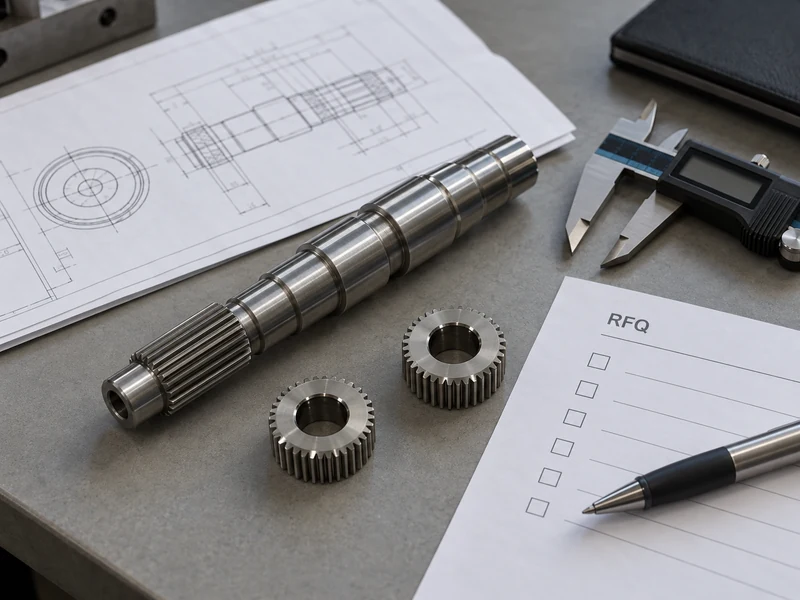
A useful custom gear and shaft RFQ gives the supplier a controlled definition of the part, the quantities to quote, and the evidence required for acceptance. Send the current drawing, available gear data, material and heat-treatment requirements, delivery schedule, and inspection scope together. Mark unresolved requirements explicitly so the quotation can separate confirmed work from assumptions.
For OEM sourcing and engineering teams, the practical goal is comparable quotations. A unit price becomes meaningful when suppliers are pricing the same revision, production condition, inspection requirements, and delivery basis.
Decide whether you need a budget estimate or a production quotation
An early inquiry can start with a sample, a concept model, or partial dimensions. Tell the supplier that the design is incomplete and ask which information is needed for a feasibility review. A production quotation needs an agreed technical baseline, including a written record of any exceptions.
For example, an existing gear may help explain an interface, but wear can make it an unreliable dimensional master. Identify whether a sample is a reference, a functional target, or an approved acceptance master. Keep the responsibility for reverse engineering and design approval visible.
The custom component review process accepts drawings, samples, and application requirements as starting points. The quotation package should make clear which of those inputs controls the finished part.
Build one revision-controlled drawing package
Provide a readable 2D manufacturing drawing and, when available, a neutral 3D model such as STEP. Identify the part number, drawing revision, units, and applicable specifications. State which document controls if the model and drawing disagree; ask the supplier to flag discrepancies before quoting or machining.
A model that shows the shape may leave tolerances, datum references, surface requirements, or manufacturing notes undefined. If your organization uses model-based definition, specify the authoritative model and the way product manufacturing information must be read.
Use a simple file register:
| File or record | What to identify | Why the supplier needs it |
|---|---|---|
| Manufacturing drawing | Part number, revision, units, approval state | Establishes the quoted requirements |
| 3D model | Matching revision and neutral file format | Supports geometry and access review |
| Referenced specifications | Document numbers and applicable revisions | Makes drawing notes interpretable |
| Clarification list | Open question, owner, required decision date | Prevents assumptions from becoming hidden requirements |
Specify the gear teeth and the shaft interfaces
For gears, include the design data needed to define and verify the teeth. For shafts, identify the features that locate bearings, seals, gears, and other mating components. The required fields depend on the part; a helical gear shaft needs different information from a simple turned shaft.
- Gear definition: gear type, tooth count, module or diametral pitch, pressure angle, and helix angle and hand where applicable. Identify whether helical gear values use the normal or transverse system.
- Tooth acceptance: the applicable accuracy standard and grade, specified tooth-thickness inspection method, and any profile or lead modifications.
- Shaft interfaces: journal diameters and fits, shoulders, splines or keyways, threads, seal surfaces, and relevant surface-finish requirements.
- Geometric controls: datums and the specified runout, position, or other geometric tolerances. Include the drawing’s governing dimensioning standard.
- Mating information: mating gear or interface data when needed to assess fit, backlash, or assembly constraints.
Do not replace an incomplete specification with phrases such as “high precision” or “standard automotive tolerance.” If a grade or inspection limit is still under review, label it as an open item. Ask the supplier to identify the cost and process implications of the alternatives.
For a project involving both gears and integrated shafts, describe the full gear and gear-shaft supply scope. State whether the inquiry covers individual parts, matched sets, or an assembly.
Define material and the condition at delivery
Name the material grade and its governing specification. Add required heat treatment, hardness, case-depth requirements where applicable, coating, and corrosion protection. Make clear whether dimensions and acceptance tests apply before or after heat treatment and finishing.
If an alternative material is acceptable, ask for it as a separately identified option. Require written approval before substitution. A similar grade name is not enough to establish equivalence for the application.
Application context helps the supplier identify questions. Share operating speed, torque or load information, lubrication, temperature, and duty cycle when available. These inputs support a review; they do not automatically transfer design responsibility or replace the drawing.
Separate samples, production batches, and annual forecasts
List the quantities you want priced rather than supplying one annual total. Distinguish prototype samples, production-intent samples, trial orders, and repeat releases. State whether the annual volume is a planning estimate or a purchase commitment.
Ask the quotation to show tooling, fixtures, inspection development, sample costs, and recurring part prices separately where relevant. Include the delivery destination, requested commercial delivery basis, packaging requirements, and the point from which lead time should be measured.
A forecast of several thousand parts does not explain whether the supplier must deliver them in small monthly releases or one shipment. That distinction affects planning, storage, packaging, and quote comparison.
Agree inspection and approval requirements before pricing
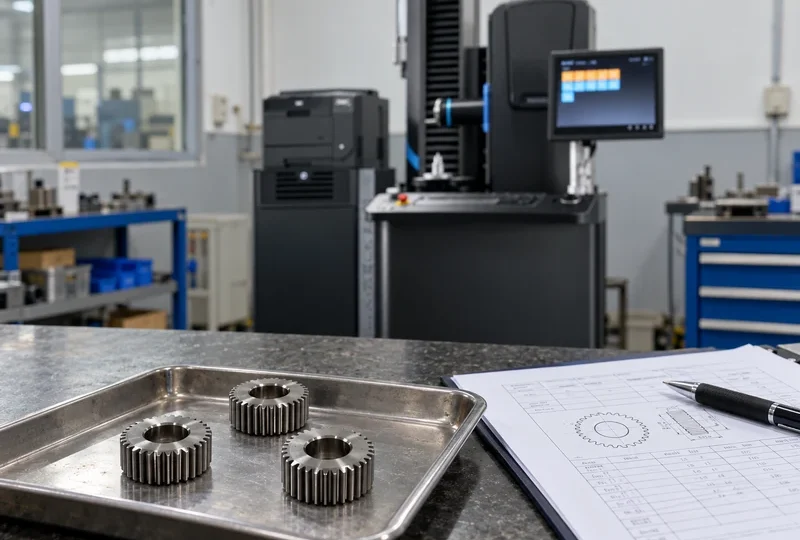
Specify the evidence you need with samples and production deliveries: dimensional results, material certificates, heat-treatment records, gear inspection reports, or agreed functional tests. Identify which characteristics need special attention and who approves the results.
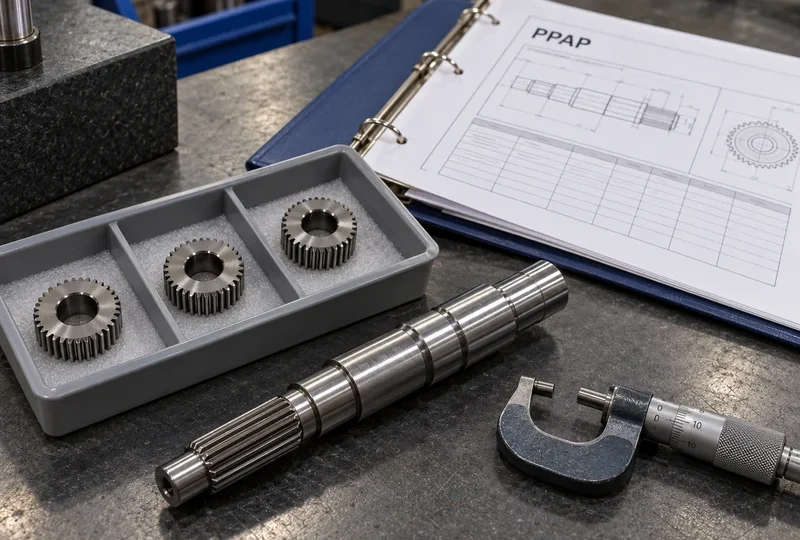
If PPAP applies, include the customer’s submission requirements and responsible contact in the RFQ. AIAG describes PPAP as a process for demonstrating that design and specification requirements can be met consistently under production conditions. Its scope should therefore be discussed before committing to the sample and production schedule. See AIAG’s PPAP overview.
Also agree how inspection reports identify the part revision and batch. Define packaging that protects the relevant features, along with any label, preservation, and traceability requirements. Avoid adding unpriced inspection obligations after a supplier has quoted a simpler scope.
A custom gear RFQ checklist your team can reuse
Copy this table into your inquiry or use it as the contents list for your attachments. The buyer and supplier should close the open items before treating the quotation as the production baseline.
| RFQ item | Buyer entry | If unresolved |
|---|---|---|
| Part and revision | Part number, drawing revision, model revision | Identify the authoritative file |
| Supply scope | Individual part, matched set, or assembly | List included and excluded items |
| Geometry and interfaces | Gear data, fits, datums, tolerances, surface requirements | Assign each design question to an owner |
| Material and treatment | Specifications and required delivery condition | Request separately priced alternatives |
| Quantity and timing | Sample quantity, release quantity, forecast, target dates | Identify estimates and commitments |
| Verification | Reports, tests, sampling, and approval requirements | Agree the evidence before sample production |
| Packaging and delivery | Protection, labels, destination, delivery basis | Ask the supplier to state its quoted assumptions |
| Commercial response | Separate tooling, samples, recurring price, validity | Request an exceptions list with the quotation |
Worked example: an inquiry with one open requirement
The following is a fictional purchasing example, not a customer case or a statement of manufacturing capacity.
An OEM buyer requests a quotation for gear shaft GS-104, drawing revision C. The RFQ includes a PDF drawing, a matching STEP model, and the material and heat-treatment specifications. It requests 20 samples and pricing for production releases of 500 and 1,000 pieces, with an estimated annual demand of 6,000 pieces.
The bearing journals have defined dimensions and datum references, but the gear inspection grade is still being reviewed. The buyer records that item as open, assigns an engineering owner, and requests a feasibility response before a firm production quotation. The supplier must identify any pricing assumption instead of silently selecting a grade.
The response is compared on the same revision, quantities, inspection scope, and delivery basis. Once engineering closes the gear requirement, both parties update the quotation baseline. The example quantities illustrate the RFQ structure only; they are not recommended order quantities.
Send the package for review
For a custom gear or shaft inquiry, send your drawing, quantities, and required inspection scope. Include the open-item list and identify whether you need an early feasibility discussion or a production quotation. This gives the technical and purchasing teams a clear starting point for reviewing the part.