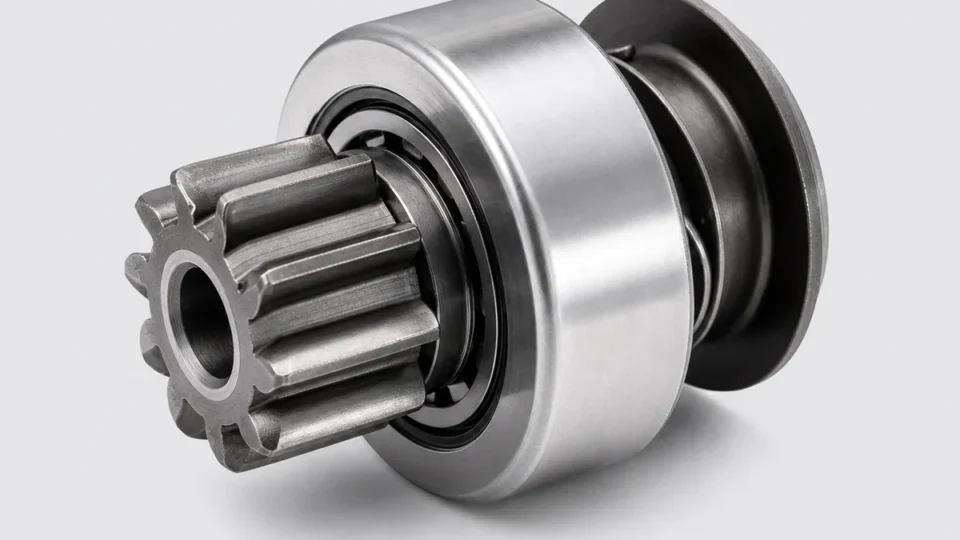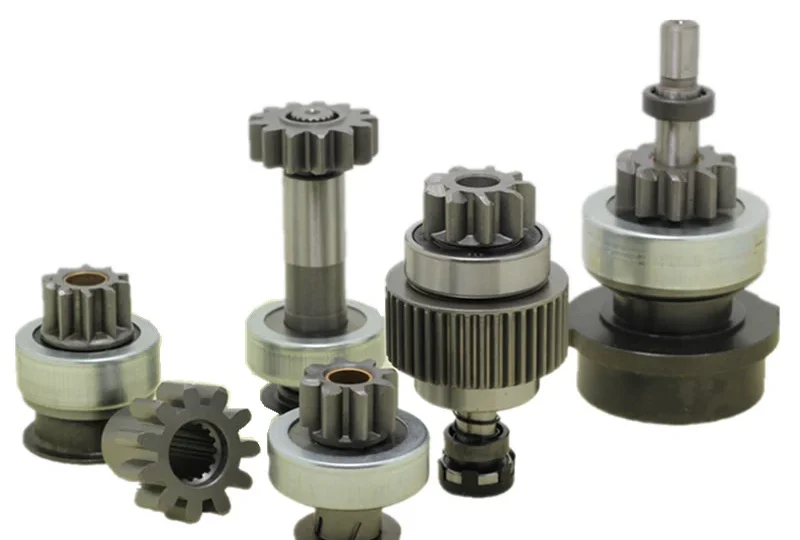


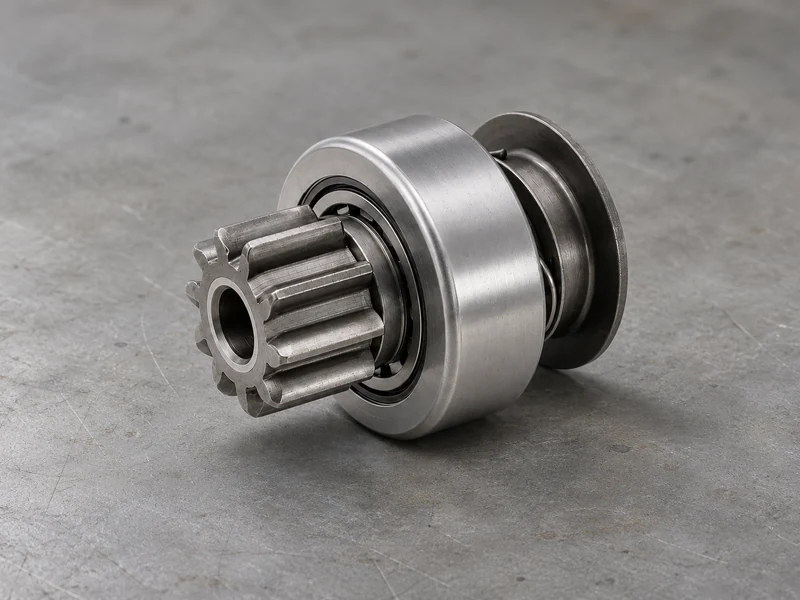
A Bendix drive is a name commonly used in the starter-parts trade for a starter-drive mechanism or assembly. Historically, it refers to an inertia-operated drive that moves a pinion into engagement as the starter shaft accelerates. In current buying conversations, the same word may also be used loosely for a pre-engaged starter’s pinion-and-clutch assembly.
For a B2B enquiry, translate the name into an identified component and construction. “Bendix drive” alone does not establish the starter model, engagement arrangement, rotation convention or mating dimensions.
Historical inertia drive and pre-engaged starter
In an inertia arrangement, relative motion between the accelerating shaft and the drive mechanism moves the pinion along its helical path toward engagement. A pre-engaged arrangement uses an actuating mechanism to move the pinion into position as part of its controlled starting sequence. Starter manufacturer Carwood Brise explains the distinction between inertia and pre-engaged starters.
The important purchasing implication is that a familiar trade name does not make the mechanisms interchangeable. The assembly drawing and manufacturer reference determine which construction is required.
| Term heard in an enquiry | What it may mean | Clarification to request |
|---|---|---|
| Bendix | Historical inertia drive or a loosely named starter-drive assembly | Complete starter reference and photograph of the required item |
| Starter drive | The component assembly transferring cranking torque through the pinion | Included pinion, clutch, sleeve and engagement interfaces |
| Starter pinion | The gear itself or a larger assembly described by its visible gear | Loose gear versus complete drive supply |
| Overrunning clutch | The one-way torque-transfer function or its component assembly | Required construction and whether it is supplied separately |
Separate torque transfer, overrunning and axial disengagement
During cranking, the starter’s drive path transfers torque through the pinion to the engine ring gear. In a drive using an overrunning clutch, that clutch transmits torque in the intended driving condition and allows relative rotation when the engine drives the pinion faster than the starter side.
DENSO’s starter manual illustrates the locking and overrunning states of a roller-clutch arrangement. That explanation concerns the clutch’s power-transfer function. The pinion moving axially out of engagement is a separate part of the starter’s release sequence.
The phrase “the drive disengages” can describe clutch overrun, pinion retraction or both. Ask what the operator observed and which starter configuration was in use before interpreting the symptom.
Identify the visible parts without guessing the internals
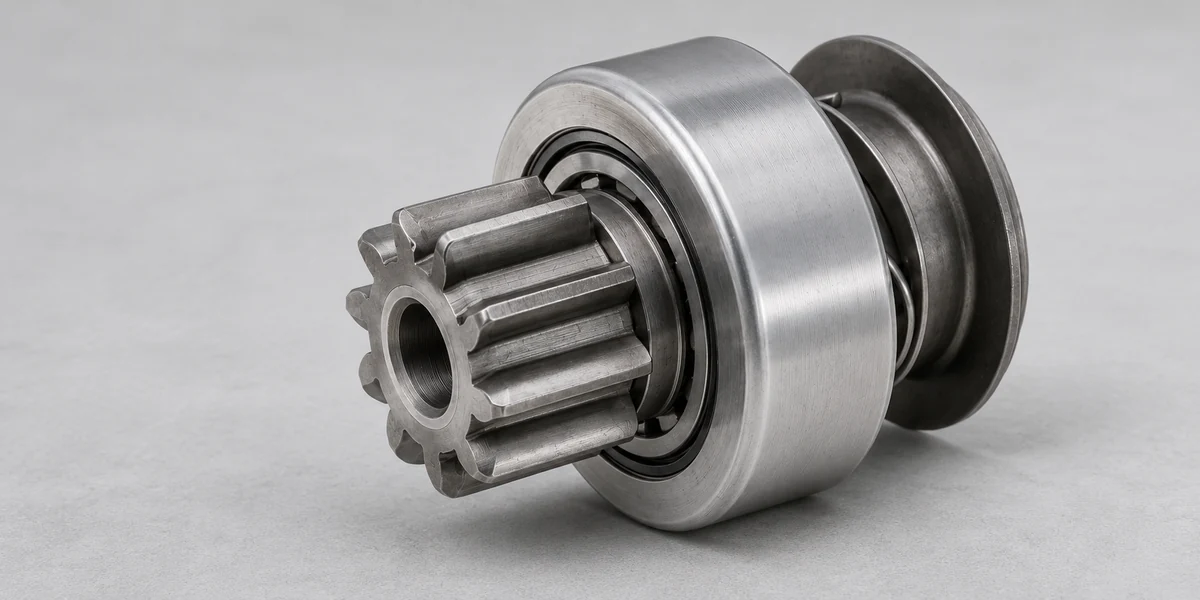
On a typical supplied drive assembly, the visible pinion, cylindrical clutch housing and rear engagement or locating features help orient the enquiry. The shaft interface may include a specified bore or spline. The complete arrangement varies by starter series.
A photograph cannot establish internal clutch construction, material properties or functional capacity. Use the drawing, controlled catalogue entry and agreed inspection or test record for those requirements. Do not label an unverified cutaway sketch as the construction of a particular supplier’s product.
Translate workshop language into a component request
Suppose a buyer needs 500 starter drives for a batch of remanufactured starters.
Initial request: “We need 500 Bendix gears for this engine.”
Useful request: “We need 500 starter-drive assemblies for the attached starter manufacturer reference. The attached photographs show the sample and markings. Please confirm the supplied assembly scope, pinion and shaft-interface match, rotation convention and sample-validation requirements. The sample is used, so its worn surfaces are not approved dimensional masters.”
The revised request still leaves technical work to do, but it identifies the item, quantity, evidence and uncertainty. The supplier can now ask focused questions instead of treating the engine name as sufficient fitment approval.
What the name cannot confirm
Two parts sold as Bendix drives may differ in tooth geometry, engagement dimensions, shaft connection or clutch function. The same pinion tooth count is only one comparison field. “12 V” or “24 V” identifies starter-system context and does not define every loose-drive interface.
For selection, follow the starter-drive fitment workflow and retain the approval boundary for the actual starter variant. For ordering, use the supplier’s item number and the agreed drawing or sample revision, not just the trade name.
View TAITECH’s starter-drive range and send the starter reference, sample photographs and quantities. State whether you need a loose component or complete drive assembly and which information remains unverified.